Laser education
Fractional CO₂ laser resurfacing: evidence, expectations and clinic preparation
Fractional CO₂ resurfacing is a specialist service that brings equipment, professional judgement and recovery planning together. A useful introduction covers how the technology works, what has been studied and the practical responsibilities around the treatment.
How is a fractional CO₂ laser different?
A carbon dioxide laser operates at 10,600 nm, a wavelength strongly absorbed by water. In ablative fractional resurfacing, the beam creates small columns of tissue removal and thermal effect. Intervening tissue remains between these columns. The resulting healing response is part of the basis for improvements in skin texture and scar appearance. [2] [4]
Fractional refers to the distribution of these treatment areas. CO₂ identifies the laser technology. Keeping the two terms separate helps a clinic compare fractional CO₂ with non-ablative fractional systems and explain why the treatment experience and recovery requirements can differ.
Read scar evidence in context
Research has investigated fractional CO₂ for atrophic acne scars, including a randomised study comparing treated areas with untreated control skin. A separate study of fractional CO₂ as a single treatment modality also reported improvements in scar appearance. These findings concern defined groups, selected devices and particular assessment methods. [1] [2]
A scar is more than its surface appearance. Shape, depth, colour, location and previous treatment can all affect the plan. Evidence about one type of acne scar should not automatically become a claim about every surgical scar, burn scar or stretch mark. The intended outcome should be a specific, realistic improvement that can be reviewed over time. [2]
Recovery belongs in the treatment discussion
Ablative treatment changes the skin barrier, so aftercare and follow-up are integral to the service. NHS information on fractional CO₂ scar treatment describes redness, swelling and a period of healing, alongside possible complications such as pigment change and scarring. The individual experience depends on the treatment and the person receiving it. [3]
Before a course is agreed, the practitioner should explain the anticipated recovery, how concerns will be reviewed and the practical implications for work and everyday life. A clear contact route matters. Planning these conversations also gives the clinic a more realistic estimate of staff time per client.
Considering Fracti50 Pro CO₂
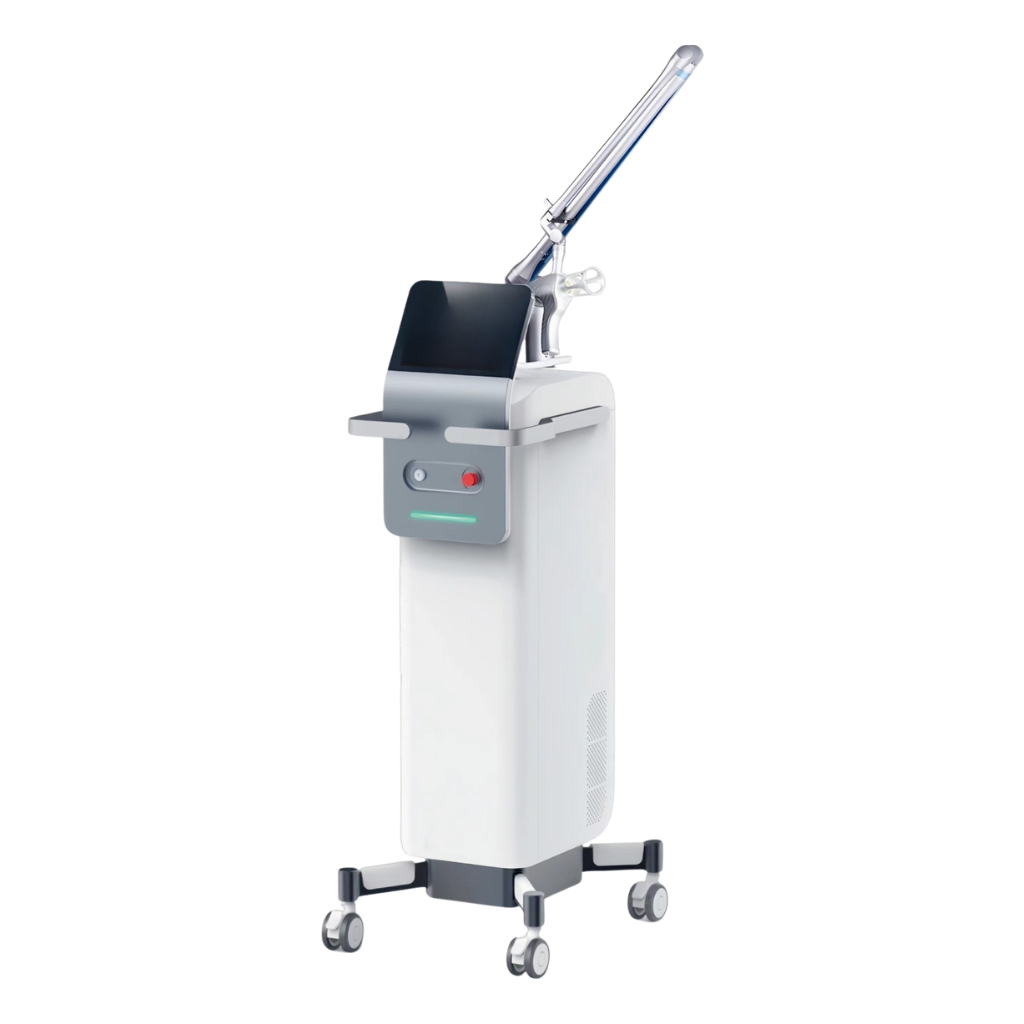
Fracti50 Pro CO₂ is the fractional CO₂ system in the current SkinLight catalogue. It includes fractional scanning and an articulated delivery arm. The service scope depends on the selected configuration and the qualifications of the operator. [5]
During an equipment discussion, review the treatment room, delivery system, maintenance arrangements and the accessories needed for the procedures you intend to provide. Establish how technical support and clinical escalation will be handled. A demonstration should answer these operational questions as well as showing the controls.
- Define the initial service and the intended client group.
- Check the team's existing training and the preparation still needed.
- Allow time for assessment, records, recovery advice and follow-up.
Build a service that can be reviewed
Use consistent baseline photographs and a documented treatment objective. A shared approach to records helps different members of the team understand what was agreed and how progress is being assessed.
For education, submit an enquiry through the SkinLight Academy CO₂ resurfacing course. Include your experience and the equipment you use or are considering. The scar consultation course is also relevant when the learning objective is assessment, documentation and deciding when another professional's input is needed.
Questions from clinic teams.
Can fractional CO₂ completely remove a scar?
The aim is to improve selected features of a scar. Complete removal should not be promised, and an individual assessment is needed to discuss realistic possibilities.
Is recovery the same for every resurfacing treatment?
No. The technology, treatment scope and individual response influence recovery. Your practitioner should explain the expected course and follow-up for the proposed procedure.
Sources and further reading.
- Hedelund and colleagues: randomised trial of fractional CO₂ for atrophic acne scars ↗
- JCAS: prospective study of fractional CO₂ monotherapy for atrophic facial acne scars ↗
- Newcastle Hospitals NHS Foundation Trust: fractional CO₂ scar treatment ↗
- Lumenis: CO₂ wavelength and absorption by water ↗
- SkinLight UK: Fracti50 Pro CO₂ configuration ↗