01Wavelengths and skin biology
Review the role of water as a laser target, skin structure and the principles of fractional delivery. Explore why the two wavelengths require separate consideration when discussing skin tone, texture and the visibility of scars, rather than treating them as interchangeable options.
02Understanding the device
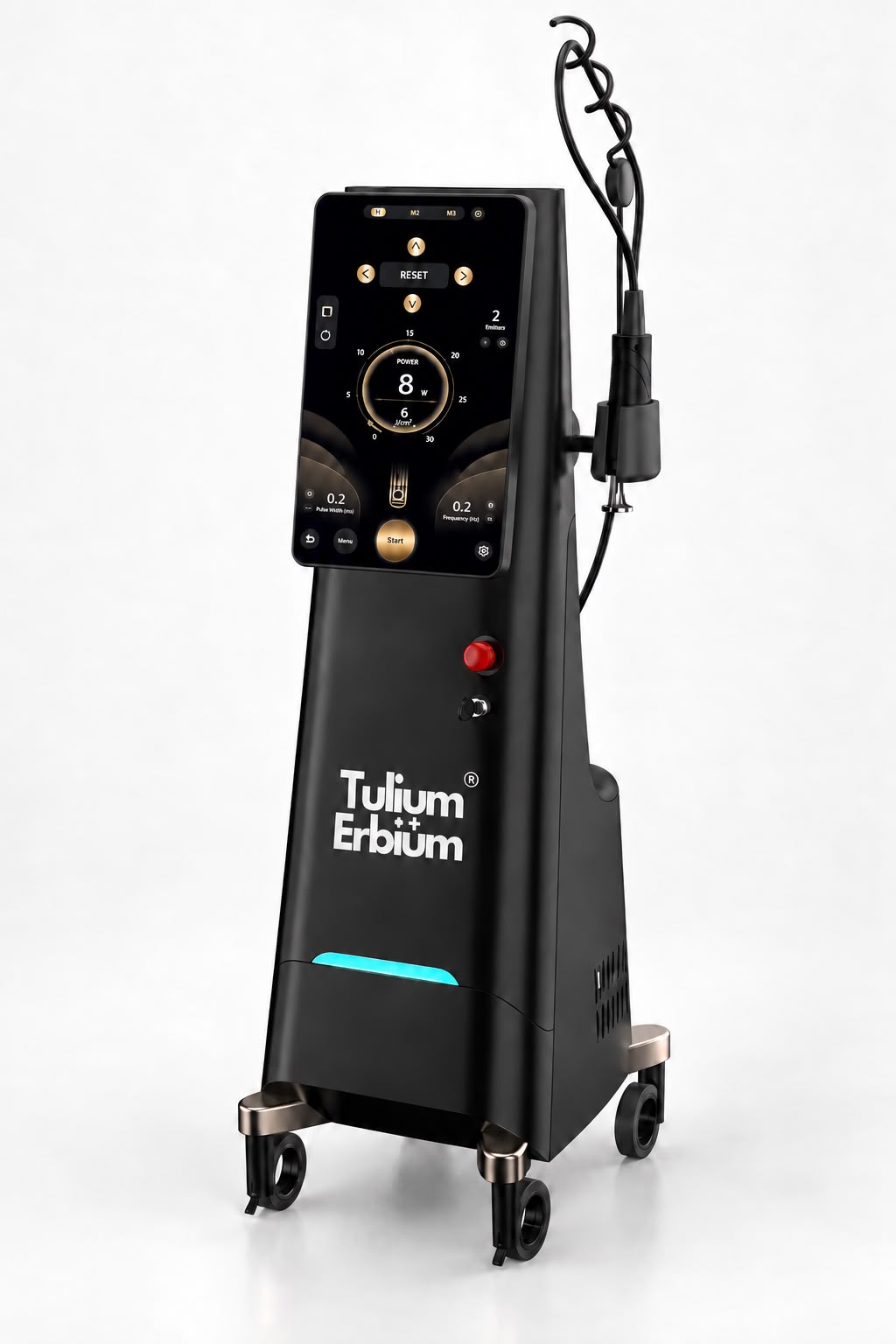
Explore the Tulium + Erbium 30 W configuration, its available tips and the operating modes relevant to the agreed learning scope. Clarify the difference between a tip's dimensions and the scanning field, and identify information that must be checked for the exact unit.
03Reading parameters with purpose
Build an understanding of power, pulse duration, energy and coverage as distinct quantities. Use explanatory examples to discuss why a single value cannot describe the whole procedure. Model-specific operating instruction belongs within the agreed teaching and participant prerequisites.
04Consultation and planning
Consider skin history, pigmentation, previous procedures, expectations and recovery planning. Review suitability assessment, protective arrangements, consent and documentation. Case discussions focus on explaining the rationale for a proposed approach and identifying when another assessment is needed.
05Client information and review
Develop a consistent way to discuss anticipated recovery, aftercare and follow-up. Plan comparable photographs and review notes. Explore how to separate observed change from lighting differences or client expectations, and when the plan should be reassessed.